
Blog

We offer a variety of services to help you.
Attachment Styles 101: How They Shape Your Adult Relationships
Have you ever wondered why you react the way you do in relationships—why closeness feels comforting to some people and overwhelming to others, or why conflict can trigger intense fear, withdrawal, or self-doubt?
These patterns aren’t random. They’re often rooted in something called attachment style—a framework that helps explain how our earliest relationships shape the way we connect, communicate, and cope in adulthood.
Understanding attachment styles can be a powerful step toward healthier relationships. It helps replace self-blame with self-awareness and opens the door to more intentional, secure connections.
Let’s break down what attachment styles are, how they develop, and how they show up in adult relationships.
What Are Attachment Styles?
Attachment theory was originally developed by psychologist John Bowlby and later expanded by Mary Ainsworth. The core idea is simple but profound: the way our caregivers responded to our needs early in life teaches us what to expect from relationships.
As children, we learn:
- Is it safe to rely on others?
- Will my needs be met?
- Do I have to work for love, or hide parts of myself to stay connected?
These early lessons form internal “relationship templates” that often carry into adulthood—especially in close relationships like romantic partnerships, friendships, and even therapeutic relationships.
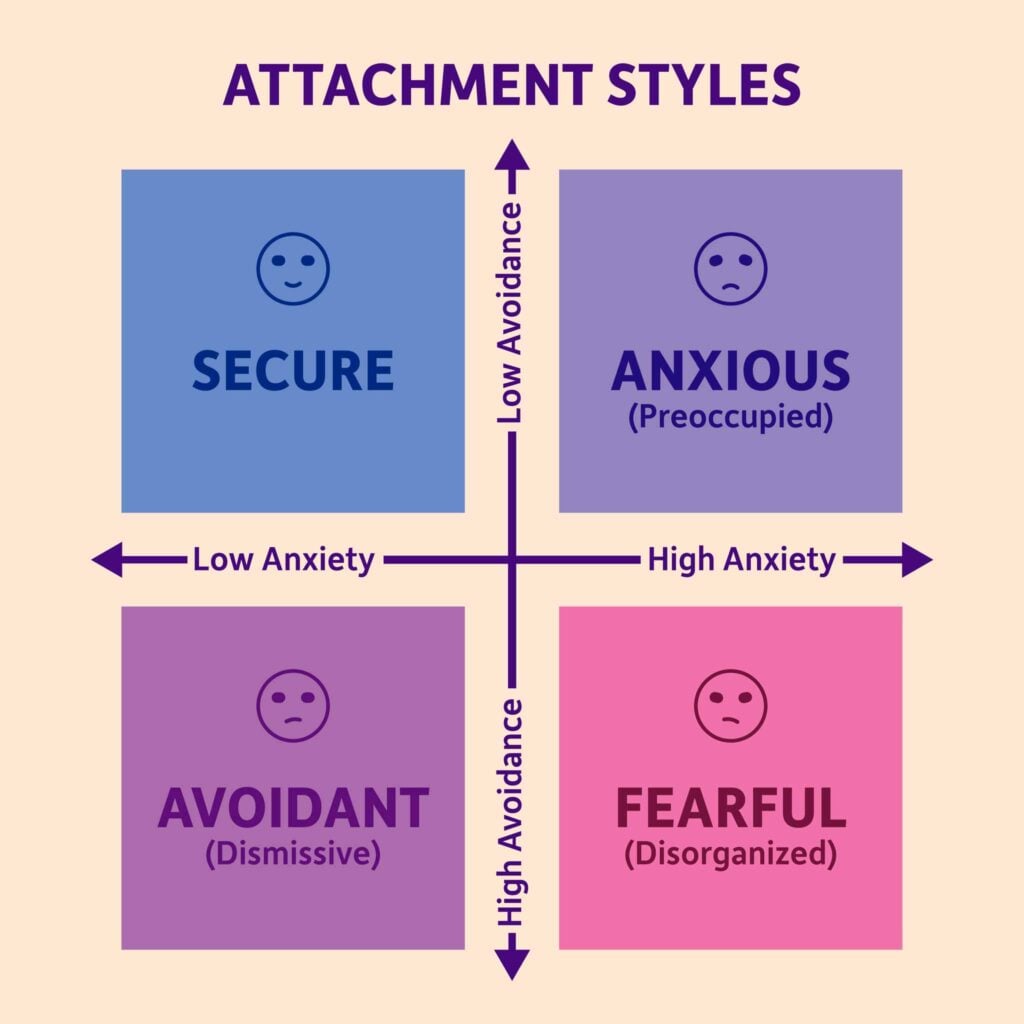
While attachment exists on a spectrum, most people primarily fall into one of four attachment styles:
- Secure
- Anxious (Preoccupied)
- Avoidant (Dismissive)
- Disorganized (Fearful-Avoidant)
Secure Attachment: The Foundation of Healthy Connection
People with secure attachment generally feel comfortable with both closeness and independence. They trust that relationships can be safe, supportive, and stable—even during conflict.
Common traits of secure attachment include:
- Comfort expressing needs and emotions
- Ability to set and respect boundaries
- Trust in their partner’s availability
- Willingness to repair after conflict
- A balanced sense of independence and intimacy
Securely attached adults tend to believe:
“I am worthy of love, and others can be trusted.”
Importantly, secure attachment doesn’t mean never experiencing conflict or insecurity—it means having the emotional tools to navigate challenges without losing a sense of self or safety.
Anxious Attachment: The Fear of Being Left
Anxious attachment often develops when caregivers were inconsistent—sometimes responsive, sometimes unavailable. This unpredictability can lead to hyper-awareness of relationships and a deep fear of abandonment.
Common traits of anxious attachment include:
- Strong desire for closeness and reassurance
- Fear of rejection or abandonment
- Overanalyzing texts, tone, or behavior
- Difficulty self-soothing during relationship stress
- Tendency to prioritize others’ needs over their own
In adult relationships, anxious attachment may show up as:
- Needing constant reassurance
- Feeling easily hurt by perceived distance
- Becoming emotionally overwhelmed during conflict
At its core, anxious attachment carries the belief:
“I have to work hard to keep people close.”
Avoidant Attachment: The Need for Distance
Avoidant attachment often forms when caregivers were emotionally unavailable, dismissive, or encouraged independence at the expense of emotional connection. As a result, emotions may feel unsafe or unnecessary.
Common traits of avoidant attachment include:
- Strong value placed on independence
- Discomfort with vulnerability
- Emotional distancing during conflict
- Minimizing needs or emotions
- Difficulty relying on others
In adult relationships, avoidant attachment may look like:
- Pulling away when things get serious
- Feeling overwhelmed by emotional closeness
- Shutting down during conflict
- Struggling to express feelings
Avoidantly attached individuals often hold the belief:
“I can only rely on myself.”
This isn’t a lack of care—it’s a learned survival strategy.
Disorganized Attachment: The Push–Pull Pattern
Disorganized attachment typically develops in environments where caregivers were both a source of comfort and fear—often due to trauma, neglect, or unpredictability.
This creates a deep internal conflict:
“I want closeness, but closeness doesn’t feel safe.”
Common traits of disorganized attachment include:
- Intense desire for connection paired with fear of it
- Rapid shifts between anxious and avoidant behaviors
- Difficulty trusting others and oneself
- High emotional reactivity
- Strong fear of abandonment and betrayal
In adult relationships, this may show up as:
- Push–pull dynamics
- Chaotic or intense relationships
- Difficulty regulating emotions
- Feeling confused about what one wants
Disorganized attachment is often linked with unresolved trauma—but it is also highly responsive to therapeutic support.
How Attachment Styles Affect Adult Relationships
Attachment styles influence more than just romantic partnerships. They affect:
- Communication patterns
- Conflict resolution
- Emotional regulation
- Boundaries
- Trust and intimacy
For example:
- An anxious partner may pursue reassurance during conflict, while an avoidant partner withdraws—creating a painful cycle.
- A disorganized partner may crave closeness but panic when it’s offered.
- Secure partners tend to slow things down, validate emotions, and seek repair.
Understanding these patterns can reduce shame and help partners move from reacting to responding.
Can Attachment Styles Change?
Yes—attachment styles are not fixed.
While early experiences shape attachment, adult relationships—especially healthy ones—can reshape it. This process is often called earned secure attachment.
Attachment can shift through:
- Therapy (especially CBT, trauma-informed, or attachment-focused approaches)
- Healthy romantic relationships
- Increased self-awareness and emotional regulation
- Learning to identify and meet your own needs
- Practicing secure behaviors, even when they feel unfamiliar
Change doesn’t happen overnight, but awareness is a powerful first step.
Moving Toward Secure Attachment
If you recognize yourself in one of the insecure attachment styles, it doesn’t mean something is “wrong” with you. These patterns once served a purpose—they helped you adapt and survive.
Healing begins with:
- Noticing your triggers
- Understanding your nervous system responses
- Learning how to self-soothe
- Communicating needs clearly and compassionately
- Building relationships that feel emotionally safe
Therapy can provide a consistent, secure space to explore these patterns, process underlying experiences, and practice new ways of relating.
Final Thoughts
Attachment styles shape how we love, protect ourselves, and connect—but they don’t define our future. With insight, support, and intention, it’s possible to move toward more secure, fulfilling relationships.
If your relationships feel confusing, intense, or emotionally exhausting, attachment awareness can help you make sense of the why behind your patterns—and begin changing them.
You don’t need to become someone else to have healthier relationships.
You just need the tools to understand yourself more deeply.