
Blog

We offer a variety of services to help you.
Beyond Talk Therapy: Innovative Therapy Tools for Mental Wellbeing
Therapy Can Be More Than Talking
When many people picture therapy, they imagine sitting in a counselor’s office talking about thoughts, feelings, relationships, and difficult experiences. While conversation is an important part of counseling, therapy need not be limited to talking.
For some individuals, additional therapeutic tools can complement traditional counseling and provide another way to work toward improved emotional regulation, relaxation, attention, stress management, and overall well-being.
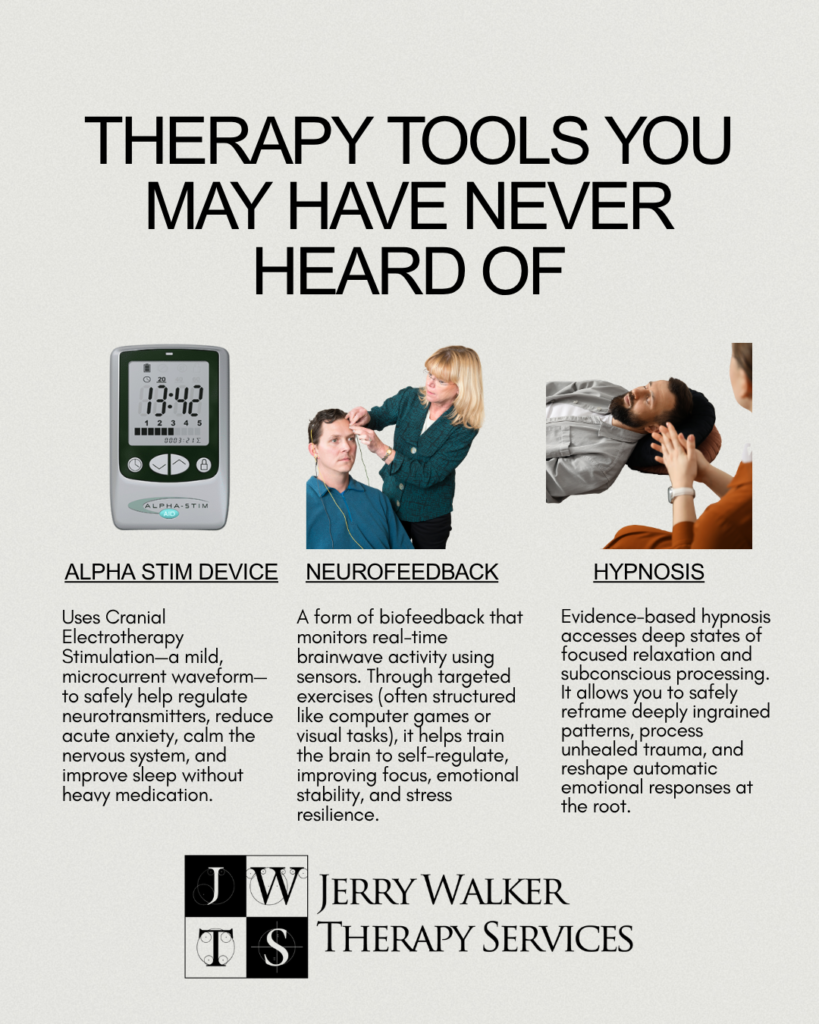
Three tools that may be incorporated into an individualized treatment plan are neurofeedback, Alpha-Stim, and therapeutic hypnosis.
These approaches are particularly interesting for individuals experiencing concerns such as anxiety, ADHD, trauma-related symptoms, chronic stress, difficulty relaxing, sleep concerns, and challenges with emotional regulation.
The goal is not to find a single “magic” treatment. Instead, effective therapy is about finding the combination of strategies that makes sense for you.
Neurofeedback: Supporting Attention and Self-Regulation
Neurofeedback is a noninvasive approach that provides information about aspects of brain activity. During a neurofeedback session, sensors are typically placed on the scalp to monitor electrical activity. The client then receives feedback through a computer-based program.
The idea is relatively straightforward: with appropriate feedback and repeated practice, individuals may learn to develop greater awareness and regulation of certain patterns of brain activity.
Neurofeedback and Anxiety
Anxiety can involve racing thoughts, difficulty concentrating, restlessness, physical tension, sleep problems, and feeling constantly “on edge.”
Neurofeedback may be incorporated into a broader treatment plan focused on regulation and stress management. Rather than simply discussing what anxiety feels like, clients have an opportunity to practice regulation in a structured setting.
This does not mean that neurofeedback eliminates anxiety. Anxiety is a normal human response. The goal is to help individuals develop healthier ways of responding when anxiety becomes excessive or begins interfering with daily life.
Neurofeedback and ADHD
ADHD can affect attention, organization, impulse control, motivation, task initiation, and executive functioning. Many individuals with ADHD know what they need to do but struggle to translate that knowledge into action consistently.
Neurofeedback may be considered as a complementary approach for individuals experiencing attention and self-regulation difficulties.
When combined with counseling, it can be part of a broader strategy that may include:
- Developing routines
- Improving time management
- Managing distractions
- Breaking large tasks into smaller steps
- Addressing procrastination
- Building organizational skills
- Increasing awareness of attention patterns
- Developing emotional-regulation strategies
The objective is not simply to “make someone focus.” It is designed to help the individual develop strategies that support functioning at home, at work, at school, and in relationships.
Neurofeedback and Trauma
Trauma can affect the body’s stress response and may contribute to hyper-vigilance, sleep difficulties, concentration problems, irritability, and difficulty feeling safe or relaxed.
Neurofeedback may be considered as one component of a trauma-informed treatment plan focused on regulation and stabilization.
Trauma therapy does not have to begin with immediately discussing the most painful experiences. Establishing safety, learning coping skills, and developing emotional regulation may be important first steps.
Alpha-Stim: A Tool for Relaxation and Stress Management
Another tool used by some mental health professionals is Alpha-Stim, a cranial electrotherapy stimulation (CES) device that delivers a very small electrical current through electrodes, commonly placed on the earlobes.
Alpha-Stim may be incorporated into treatment plans involving relaxation, anxiety, stress, and sleep-related concerns when clinically appropriate.
For individuals who find it difficult to relax, a structured relaxation intervention may offer another opportunity to practice calming and self-regulation.
Alpha-Stim and Anxiety
Anxiety can make relaxation surprisingly difficult.
You may know that you need to slow down, but your thoughts continue racing. You may feel exhausted but unable to settle down at night. You may constantly anticipate the next problem even when nothing immediately requires your attention.
Alpha-Stim may be incorporated as a complementary relaxation-oriented intervention while therapy addresses the underlying thoughts, behaviors, triggers, and circumstances contributing to anxiety.
The combination is important. Relaxation alone does not necessarily resolve the source of anxiety. Counseling can help you understand your anxiety while developing practical strategies for managing it.
Alpha-Stim and Trauma-Related Stress
People who have experienced trauma may sometimes feel as though their bodies remain prepared for danger even when they are physically safe.
Trauma-informed therapy can help clients develop grounding, coping, and emotional-regulation skills. A relaxation-focused tool, such as Alpha-Stim, may complement these strategies for appropriate clients.
The emphasis should remain on helping the client develop a greater sense of safety, control, and self-awareness—not forcing the individual to move faster than they are ready.
Therapeutic Hypnosis: Focus, Relaxation, and Positive Change
Hypnosis is another therapeutic tool that is frequently misunderstood.
Movies and television often portray hypnosis as someone losing control or being manipulated into doing something against their will. Therapeutic hypnosis is not about taking away someone’s control.
Clinical hypnosis generally involves focused attention, relaxation, imagery, and therapeutic suggestions.
For some individuals, hypnosis can provide an opportunity to slow down, focus attention, practice relaxation, and work toward specific therapeutic goals.
Hypnosis and Anxiety
When anxiety is high, the mind can become consumed by “what if” questions and worst-case scenarios.
Therapeutic hypnosis may be incorporated into a treatment plan to support relaxation and focused attention. It may help clients practice intentionally shifting attention away from overwhelming thoughts and toward a calmer internal state.
Hypnosis does not replace cognitive or behavioral therapy. Instead, it may complement strategies that help clients recognize anxious thinking patterns, challenge unhelpful beliefs, and develop healthier responses to stress.
Hypnosis and ADHD
People with ADHD may experience difficulty sustaining attention, managing distractions, or slowing down mentally.
Hypnosis may be incorporated into treatment when appropriate goals involve focused attention, relaxation, habit development, or stress management.
Again, it is not a cure for ADHD. Instead, it may serve as one additional tool within a comprehensive approach that addresses executive functioning, behavioral patterns, emotional regulation, and daily-life challenges.
Hypnosis and Trauma
Hypnosis requires particular care when working with trauma.
Therapeutic hypnosis may be used for relaxation, grounding, stress management, or to develop a greater sense of calm and control. However, it should not be promoted as a method for uncovering hidden or “repressed” memories.
Trauma-informed care should prioritize safety, collaboration, and the client’s autonomy. Any technique used in therapy should be introduced thoughtfully and at a pace that respects the individual’s needs and readiness.
What If You Are Experiencing Anxiety, ADHD, and Trauma Together?
Mental health concerns rarely fit neatly into categories.
Someone with ADHD may also experience anxiety. A person with a trauma history may struggle with concentration and sleep. Someone experiencing chronic anxiety may have difficulty focusing because their attention is constantly directed toward perceived threats.
This overlap is one reason individualized treatment matters.
Rather than asking, “What diagnosis do you have?”, therapy should also ask:
“What are you experiencing, and what do you want to change?”
Your treatment plan may involve traditional counseling, CBT strategies, neurofeedback, Alpha-Stim, hypnosis, behavioral interventions, grounding techniques, psycho-education, or a combination of approaches.
The goal is not to use every available tool.
The goal is to use the right tools for you.
A Personalized Approach to Therapy
There is no one-size-fits-all approach to mental health treatment.
Some clients benefit primarily from traditional talk therapy. Others appreciate having additional experiential or technology-assisted tools incorporated into their treatment. Some people want to understand their thoughts and behaviors, while others also want practical strategies for improving relaxation, focus, and emotional regulation.
A personalized approach considers your:
- Current concerns
- Treatment goals
- Personal history
- Strengths and resources
- Preferences
- Daily functioning
- Readiness for different interventions
Therapy should also be collaborative. You should understand why a particular intervention is being recommended and have an opportunity to ask questions about its purpose, benefits, limitations, and appropriateness for your situation.
You Don’t Have to Keep Struggling Alone
Maybe anxiety has started controlling your day.
Maybe ADHD is making work, school, relationships, or daily responsibilities more difficult than they need to be.
Maybe experiences from the past continue affecting how safe, calm, or connected you feel today.
Or perhaps you know that something needs to change, but you are not sure where to begin.
You do not have to figure it out alone.
Therapy can provide a supportive environment where you can better understand what is happening, identify patterns that may be keeping you stuck, and develop practical strategies for moving forward.
Neurofeedback, Alpha-Stim, and therapeutic hypnosis may be considered when appropriate. Still, the most important part of treatment is understanding you—your experiences, your goals, and the changes you want to make.
Ready to Explore Whether Therapy Is Right for You?
Taking the first step toward therapy can feel intimidating, especially if you have never worked with a counselor before. You do not have to have everything figured out before reaching out.
If anxiety, ADHD, trauma, stress, or emotional regulation difficulties are affecting your life, consider scheduling a consultation to explore your options.
Together, we can discuss what you are experiencing, identify your goals, and determine whether counseling and complementary tools such as neurofeedback, Alpha-Stim, or therapeutic hypnosis may fit into your individualized treatment plan.
You deserve a treatment approach that meets you where you are—and helps you move toward where you want to be.
Take the first step today. Reach out to schedule a therapy consultation and begin exploring what personalized mental health care can look like for you.