
Blog

We offer a variety of services to help you.
What Is Neurofeedback? A Beginner’s Guide to Brain Training for ADHD, Anxiety, and Better Focus
If you’ve been searching for natural, non-medication ways to improve focus, reduce anxiety, or help your child with ADHD, you may have come across something called neurofeedback.
It sounds high-tech—and it is—but it’s also a safe, non-invasive, and increasingly popular way to train the brain to function more efficiently.
In this guide, we’ll break down what neurofeedback is, how it works, what it helps with, and what you can expect if you decide to try it.
What Is Neurofeedback?
Understanding the Basics
Neurofeedback (also called EEG biofeedback) is a type of therapy that helps your brain learn how to regulate itself better.
Your brain is constantly producing electrical activity—often referred to as “brainwaves.” These brainwaves influence how you think, feel, and behave.
When brainwaves are out of balance, you might experience:
- Trouble focusing
- Anxiety or racing thoughts
- Poor sleep
- Emotional ups and downs
- ADHD symptoms
Neurofeedback works by giving your brain real-time feedback about its activity, so it can learn to self-correct.
A Simple Analogy
Think of neurofeedback like a mirror for your brain.
Just like you use a mirror to adjust your appearance, neurofeedback allows your brain to “see” what it’s doing and make adjustments in the moment.
Over time, this leads to healthier, more efficient brain patterns.
How It Actually Works
During a neurofeedback session:
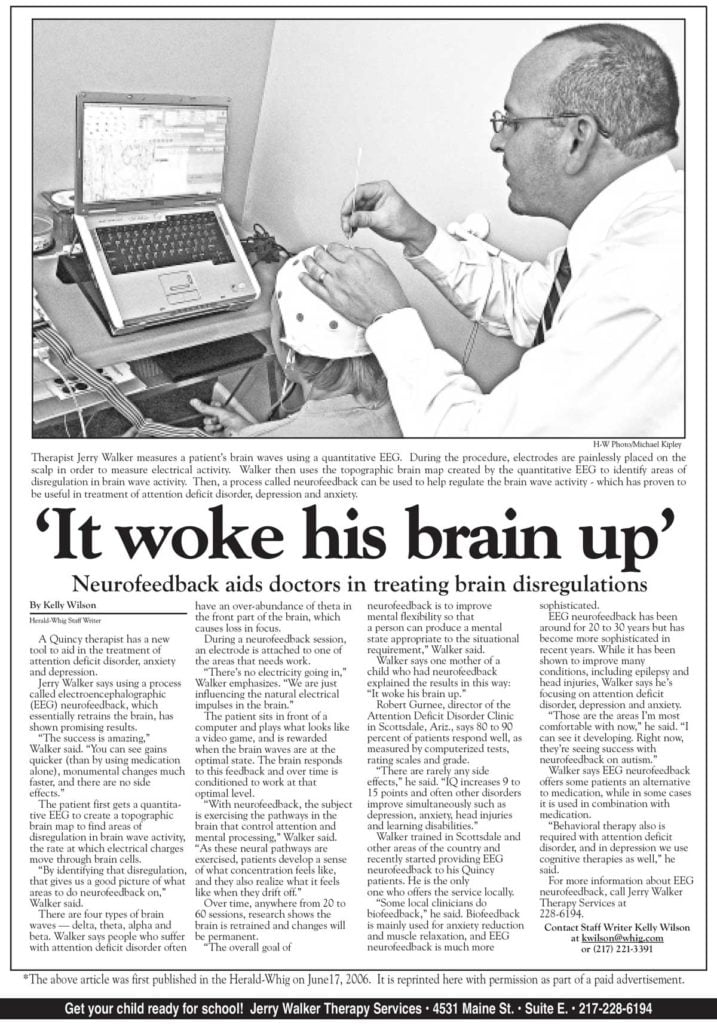
- Small sensors are placed on the scalp (nothing goes into the brain)
- The sensors measure brainwave activity
- This activity is displayed through a computer program
- You receive feedback—often through a movie, game, or sound
For example:
- When your brain is functioning in a balanced way, the movie plays smoothly
- When it’s not, the screen may dim or pause
Your brain naturally wants the reward (the movie playing), so it begins adjusting itself automatically.
This process is called operant conditioning—learning through feedback and reinforcement.
What Can Neurofeedback Help With?
Neurofeedback is commonly used for a wide range of challenges, especially those involving regulation of attention, mood, and stress.
ADHD and Focus
One of the most common uses of neurofeedback is for ADHD.
It can help improve:
- Attention and concentration
- Impulse control
- Organization and follow-through
- Mental clarity
Many clients report feeling more focused without needing to rely solely on medication.
Anxiety and Stress
If your brain tends to stay in “overdrive,” neurofeedback can help calm the nervous system.
It may reduce:
- Racing thoughts
- Chronic worry
- Physical tension
- Panic symptoms
Over time, clients often feel more relaxed and resilient in stressful situations.
Sleep Issues
Because neurofeedback helps regulate brain activity, it can also improve sleep.
Clients often notice:
- Falling asleep faster
- Staying asleep longer
- Waking up feeling more rested
Emotional Regulation
For both kids and adults, neurofeedback can support:
- Fewer emotional outbursts
- Better frustration tolerance
- Improved mood stability
This is especially helpful for children who struggle with big emotions.
Peak Performance
Neurofeedback isn’t just for challenges—it’s also used to optimize performance.
Professionals, students, and athletes use it to enhance:
- Focus
- Reaction time
- Mental clarity
- Stress resilience
What to Expect from Neurofeedback Therapy
Is Neurofeedback Safe?
Yes—neurofeedback is considered safe and non-invasive.
There is:
- No medication involved
- No electrical stimulation going into the brain
- No significant side effects for most people
It simply measures brain activity and provides feedback.
What Does a Session Feel Like?
Most sessions are relaxing and even enjoyable.
You’ll typically:
- Sit comfortably in a chair
- Watch a screen or listen to audio
- Remain awake and aware the entire time
Many clients describe it as calming—or even meditative.
How Long Does It Take to Work?
Results vary, but many people notice improvements within:
- 5–10 sessions (early changes)
- 20–40 sessions (more lasting results)
Because neurofeedback is training your brain, results tend to build over time.
Is It Right for You or Your Child?
Neurofeedback may be a good fit if:
- You’re looking for non-medication options
- Traditional therapy hasn’t been enough on its own
- You want to address the root of attention or regulation issues
- You prefer a brain-based, science-informed approach
It can also be combined with other therapies for even better results.
Final Thoughts
Neurofeedback is a powerful tool that helps the brain learn to function at its best—without force, medication, or invasive procedures.
By improving how the brain regulates itself, it can lead to better focus, calmer emotions, improved sleep, and greater overall well-being.
If you’re curious whether neurofeedback could help you or your child, the next step is simply starting a conversation with a qualified provider.
If you’re located in the Quincy, Illinois area and want to learn more about neurofeedback therapy, our office offers personalized assessments and treatment plans tailored to your needs.
Contact us today to schedule a consultation and take the first step toward a healthier, more balanced brain.